
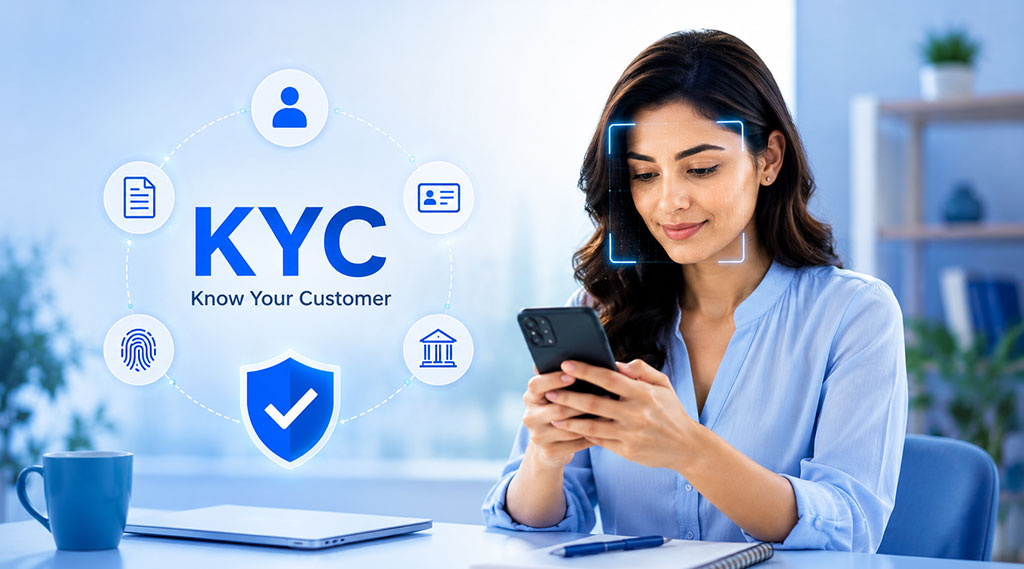
Quick Answer: KYC (Know Your Customer) is the process businesses use to identify and verify customers, understand their risk, and support safe customer onboarding and AML requirements. A typical KYC process includes customer identification, identity verification, customer due diligence, AML screening, risk assessment, and ongoing monitoring.
Introduction
Know Your Customer (KYC) is a process used by businesses to establish that a customer is who they claim to be and to understand the risks associated with the relationship. KYC is especially important in financial services and other regulated industries, where businesses must take reasonable steps to prevent fraud, money laundering, terrorist financing, and other financial crime risks.
As customer onboarding increasingly moves online, KYC can include digital identity verification, document checks, biometric or liveness verification, sanctions and PEP screening, risk assessment, and ongoing monitoring. The exact requirements vary by jurisdiction, industry, customer type, and risk level.
What Does KYC Mean?
KYC stands for Know Your Customer. It refers to the processes a business uses to identify a customer, verify their identity, collect relevant information, and assess the risks associated with the customer relationship.
Depending on the business and its risk-based approach, KYC information may include:
- Full name
- Date of birth
- Residential or registered address
- Nationality or country of residence
- Government-issued identification
- Contact information
- Employment, occupation, or source-of-funds information
- Business information for customers acting on behalf of an organization
Why Is KYC Important?
KYC helps businesses make informed decisions about who they onboard and the level of risk associated with each customer. A well-designed KYC process can help organizations:
- Verify that customers are genuine and reduce identity-related fraud.
- Identify potential exposure to sanctions, politically exposed persons (PEPs), adverse media, and other financial crime risks.
- Apply appropriate customer due diligence based on risk.
- Meet applicable regulatory and AML/CFT requirements.
- Detect changes in customer risk over time through ongoing monitoring.
- Reduce manual and repetitive onboarding work through automation.
- Build safer and more trustworthy customer relationships.
Who Needs KYC?
KYC requirements vary by jurisdiction and business model, but KYC is particularly relevant to organizations that operate in regulated or higher-risk sectors. These can generally include:
- Banks and financial institutions
- Fintech companies and payment service providers
- Money exchange and remittance businesses
- Insurance companies
- Investment and wealth management firms
- Virtual asset service providers (VASPs)
- Real estate businesses
- Jewellery and precious metals businesses
- Company formation and corporate service providers
- Legal, accounting, and other professional service providers
KYC is not just limited to these industries. Any business that needs to verify customer identities, assess customer risk, or comply with applicable regulatory requirements may need to implement KYC procedures.
How Does the KYC Process Work?
Although KYC procedures differ across organizations, a typical KYC workflow follows several connected steps:
- Customer Identification: The business collects basic information needed to identify the customer.
- Identity Verification: The information is checked against reliable and appropriate sources, such as government-issued identity documents or trusted databases.
- Customer Due Diligence (CDD): The business evaluates the customer, the purpose of the relationship, and relevant risk factors.
- AML Screening: The customer may be screened against sanctions, PEP, adverse media, and other relevant watchlists or databases.
- Risk Assessment: The business assigns an appropriate risk level based on factors such as customer type, geography, products, and screening results.
- Enhanced Due Diligence (EDD): Where higher risk is identified, additional checks and information may be required.
- Ongoing Monitoring: Where required, customer information and risk indicators are reviewed over time rather than only at onboarding.
What Documents Are Required for KYC?
The documents required for KYC depend on the customer’s location, type, risk level, and the applicable regulations. Common examples include:
- Passport or national identity card
- Residence or address documentation
- Proof of address
- Business registration documents for corporate customers
- Ownership and control information
- Tax or financial information where relevant
Businesses should collect only the information and documentation necessary for their legal and risk-management requirements and should apply appropriate data protection controls.
KYC vs. KYB
KYC (Know Your Customer) generally focuses on verifying individuals and understanding their risk. KYB (Know Your Business) focuses on verifying organizations and understanding their ownership, control, business activities, and associated risks.
Area | KYC | KYB |
Primary focus | Individual customers | Business entities |
Key information | Identity and personal details | Company and ownership details |
Ownership checks | Usually not applicable to an individual | Directors, shareholders, and UBOs |
Risk assessment | Customer and relationship risk | Business, ownership, activity, and relationship risk |
KYC vs. AML: What Is the Difference?
KYC and AML are related but not identical. KYC focuses on knowing and verifying the customer and assessing customer risk. AML (Anti-Money Laundering) is the broader framework of policies, controls, procedures, monitoring, and reporting used to prevent and detect money laundering and related financial crime.
In practice, KYC is often one important component of an organization’s broader AML program.
What Happens If a Business Does Not Perform KYC?
Weak or inadequate KYC controls can increase a business’s exposure to regulatory, financial, and reputational risks. Depending on the jurisdiction and circumstances, consequences may include:
- Regulatory penalties and enforcement action
- Fraud and identity-related losses
- Increased exposure to money laundering and terrorist financing risks
- Reputational damage
- Higher remediation and compliance costs
- Loss of customer and business partner trust
KYC Best Practices
An effective KYC program should be risk-based, proportionate, and supported by reliable processes. Key practices include:
- Use a risk-based approach rather than applying identical checks to every customer.
- Collect accurate and relevant customer information.
- Verify identities using reliable and appropriate sources.
- Use liveness checks for digital onboarding to help confirm that the person is real and reduce the risk of impersonation and identity fraud.
- Conduct sanctions, PEP, adverse media, and other relevant AML screening.
- Apply enhanced due diligence when higher risk is identified.
- Keep customer information and risk assessments up to date.
- Perform ongoing screening and monitoring where required.
- Maintain appropriate records in line with applicable retention requirements.
- Automate repetitive checks where appropriate while maintaining human review for alerts and exceptions.
- Regularly review and improve KYC procedures as regulations, risks, and business models change.
How Technology Is Changing KYC
Digital KYC solutions can automate key parts of customer onboarding and verification. Depending on the solution and regulatory requirements, technology can support identity document verification, data extraction, liveness checks, database verification, AML screening, risk scoring, and ongoing monitoring.
Automation reduces repetitive manual work and improves consistency, while organizations should still maintain appropriate controls, review exceptions, protect customer data, and ensure automated processes meet applicable requirements.
Simplify KYC and AML with FinchSCAN
FinchSCAN helps businesses streamline customer onboarding and AML screening through a digital platform. It combines digital KYC, identity verification, liveness checks, sanctions and PEP screening, risk assessment, ongoing monitoring and reporting.
Whether you are onboarding customers digitally or strengthening your existing KYC process, FinchSCAN helps reduce manual work and make verification and screening more efficient.
Ready to automate your KYC workflow? Start with FinchSCAN today.
Final Thoughts
KYC is more than an identity verification step. It is a structured process for understanding who a business is dealing with, verifying customer information, assessing risk, and supporting broader AML and financial crime controls.
A strong KYC program combines a risk-based approach, reliable verification, relevant screening, ongoing review, appropriate record keeping, and technology where it can improve efficiency and consistency.
Because KYC obligations differ across jurisdictions and industries, businesses should design their workflows around the requirements that apply to their specific activities and customer base.
Verify. Screen. Comply. — Get started with FinchSCAN.
Frequently Asked Questions About KYC
What is KYC in simple terms?
KYC means Know Your Customer. It is the process of identifying and verifying a customer and assessing the risks associated with the customer relationship.
What is the purpose of KYC?
The purpose of KYC is to help businesses verify customer identities, understand customer risk, reduce exposure to fraud and financial crime, and meet applicable regulatory requirements.
Is KYC mandatory?
KYC requirements depend on the country, industry, customer type, and applicable laws and regulations. Many regulated businesses are required to perform customer identification and due diligence.
What is the difference between KYC and KYB?
KYC generally verifies individuals, while KYB verifies businesses, including their legal existence, ownership, control, directors, ultimate beneficial owners, and business activities.
What is CDD in KYC?
Customer Due Diligence (CDD) is the process of collecting and assessing relevant customer information to understand the customer and associated risks.
What is EDD in KYC?
Enhanced Due Diligence (EDD) involves additional checks and information for customers or relationships presenting higher risk.
Does KYC happen only during onboarding?
No. Depending on the applicable requirements and risk profile, businesses may need to update customer information and conduct ongoing screening or monitoring after onboarding.
Can KYC be automated?
Yes. Platforms like finchscan can automate many KYC activities, including document verification, identity checks, liveness detection, AML screening, risk scoring, and ongoing monitoring. This helps businesses streamline onboarding while reducing repetitive manual checks.